Invert-Logo
landing-page-Nov-24-2026-06-56-41-9958-AM
Success Story

Transforming Salesforce Case Management with Automated Monitoring and Centralized Processing

Automotive services | Global
Listen to the Case Study
The client is a global automotive services company with operations spanning fleet management, logistics, supply chain solutions, and commercial customer support. Its operations depend on timely issue identification, efficient case resolution, and coordinated service processes.

The challenge: Limited visibility across operational case processes

The client relied on manual monitoring to identify Salesforce integration cases requiring attention. Teams had to continuously track open cases, increasing administrative effort and creating the risk of delayed issue resolution.

Return Mail management was also fragmented. Teams used unrelated case types, such as Licensing Other, and relied on manual workarounds for case creation, status updates, task management, and coordination with Customer Relations. With approximately 100 Return Mail cases processed weekly, limited tracking, reporting, and system integration made the process difficult to manage consistently and scale.
The solution: Automated monitoring and centralized Salesforce case management

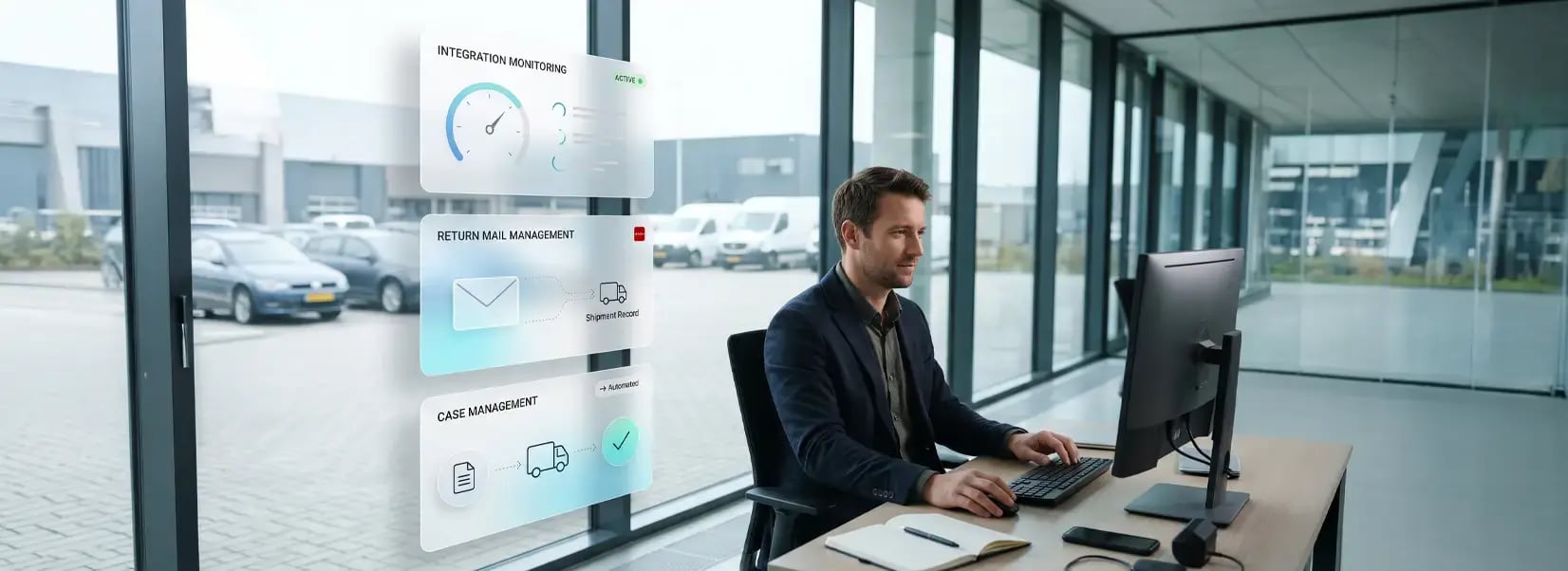
Datamatics implemented automated Salesforce integration case monitoring that runs hourly, identifies cases requiring attention, and sends proactive notifications to relevant teams through Microsoft Teams. For Return Mail operations, Datamatics introduced a dedicated Return Mail Case Type and centralized activities within a single case. This standardized case processing, enabled lifecycle tracking from receipt through shipment creation and closure, and improved search, reporting, and synchronization with supporting systems.

Impact: Improved visibility and operational efficiency

Proactive integration case monitoring

Automated hourly monitoring and Microsoft Teams notifications enabled timely identification of integration issues without continuous manual tracking.

Standardized Return Mail case management

A dedicated case type replaced fragmented handling through unrelated case categories and manual workarounds.

Improved case visibility and traceability

Centralized processing enhanced tracking, search, and reporting across the Return Mail case lifecycle.

Scalable operational case processing

The solution supported approximately 100 Return Mail cases per week, reducing manual case creation and improving coordination across operational teams.

Download this Case Study Now

Just fill this form to download the case study.